
















40% of a data center’s energy bill is from cooling equipment!!
The cooling infrastructure is a significant part of a data center. The complex connection of chillers, compressors and air handlers create the optimal computing environment, ensuring the longevity of the servers installed within and the vitality of the organization they support.
Yet, this current ecosystem has come at a price. The EPA’s oft-cited 2007 report predicted that data center energy consumption, if left unchecked, would reach 100 million kWh by 2011 with a corresponding energy bill of $7.4 billion. This conclusion, however, isn’t strictly based on Moore’s Law or the need for greater bandwidth. Their estimate envisions tomorrow’s processing power will be addressed with yesterday’s cooling strategies. The shortcomings of these designs, coupled with demand for more processing power, would require (10) new power plants to provide the juice for it all, according to the report.
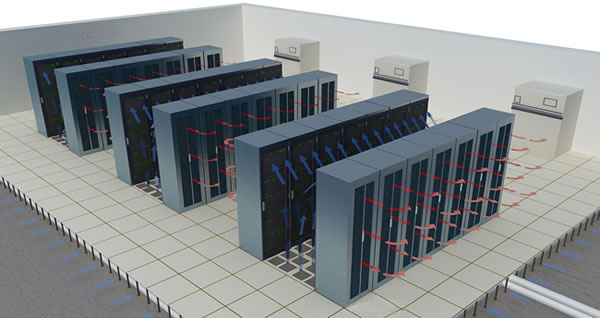
- Bypass air: Conditioned air that does not reach computer equipment, escaping through cable cut-outs, holes under cabinets, misplaced perforated tiles or holes in the computer room perimeter walls—limits the precise delivery of cold air at the server intake.
- Hot air recirculation, where waste heat enters the cold aisle, ensures that the cooling infrastructure must throw colder air at the equipment to offset this mixing.
- Hot air contamination prohibits the air handlers from receiving the warmest possible exhaust air, rendering their operation less efficient.
- Hot spots may persist as a result of all of the above.
Data Center Applications can address these inefficiencies through measurement, modeling, and analysis. These tools — including Computational Fluid Dynamics (CFD) analysis, air velocity and pressure gauging — provide a snapshot of your environment, pinpointing problem areas. Furthermore, real time measurement provides an immediate analysis of your data center environment. Often significant improvements are achieved with quick, inexpensive remedies, like blanking panels and brush strips.




